
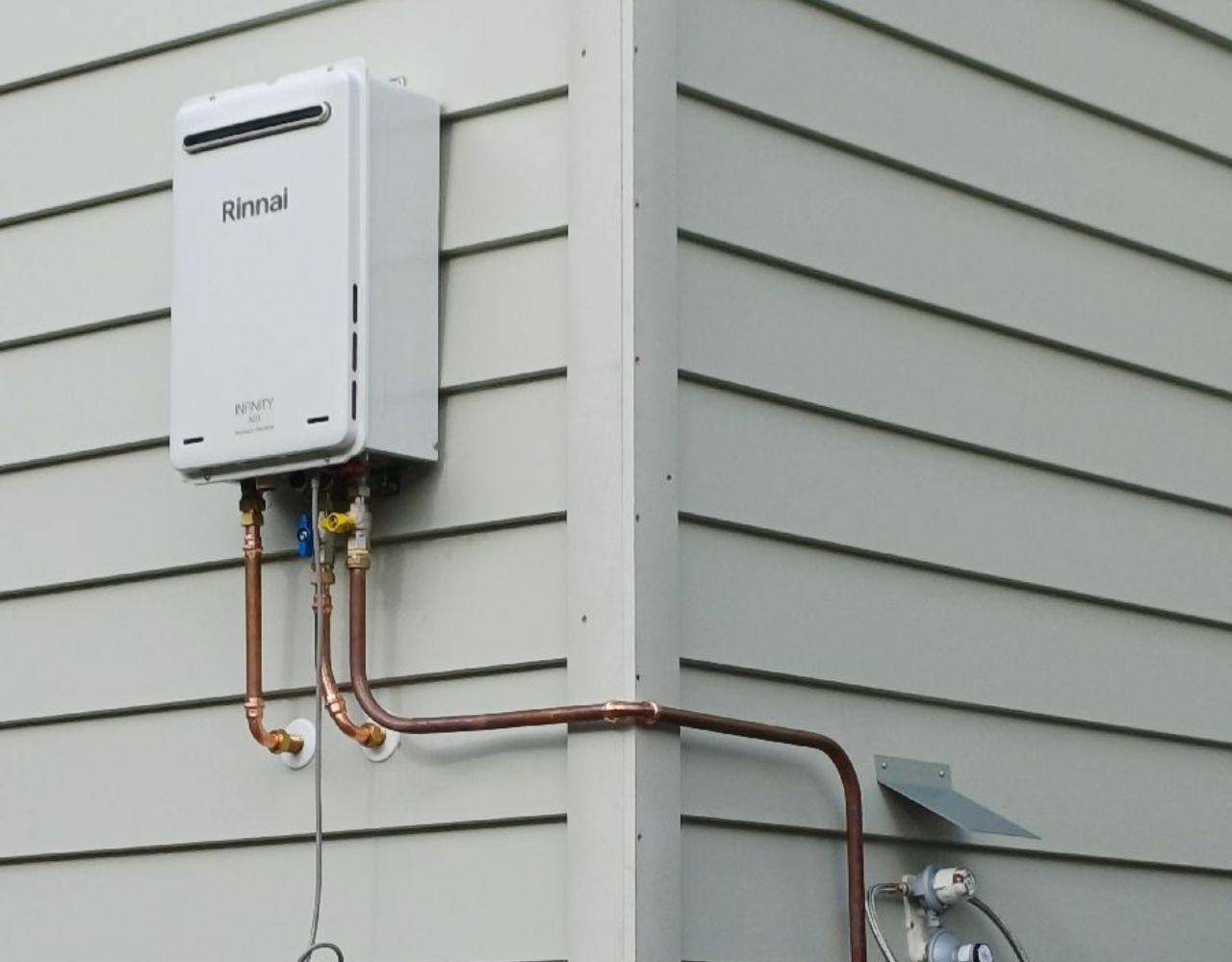
If you’re an Auckland homeowner running gas hot water, whether that’s a califont, a gas storage cylinder, or an older LPG setup, you’ve probably noticed the costs creeping up. Gas line charges, gas prices, and bottle delivery fees have all risen in recent years, and more Kiwi households are asking the same question: should I switch to a heat pump?
It’s not a simple yes or no. Both systems have their strengths, and the right choice depends on your household, your property, and what you’re paying right now. Here’s an honest comparison to help you decide.
How Does Gas Hot Water Work?
Gas hot water systems use natural gas (town supply) or LPG (bottled gas) to heat water. There are two main types:
Califonts (continuous flow) heat water instantly as it passes through the unit. There’s no storage tank, so you never run out of hot water. The unit only fires when you turn on a hot tap, which makes them efficient for on-demand use. Brands like Rinnai Infinity and Rheem Integrity are the most common in Auckland homes.
Gas storage cylinders like the Rheem Stellar use a gas burner to heat water stored in a tank. They keep a set volume of hot water ready to go, but once it’s used up you need to wait for the tank to reheat. Gas storage recovers faster than electric storage, but it’s still limited by the tank size.
Both types require a gas supply, either a connection to the town gas network or LPG bottles on the property. And both require a certified gasfitter for installation and servicing.
How Does a Heat Pump Work?
A hot water heat pump doesn’t generate heat directly. Instead, it pulls warmth from the surrounding air and transfers it into a water storage tank, using the same basic technology as a fridge or air conditioning unit, just running in reverse.
Because it’s moving heat rather than creating it, a heat pump can produce around 3-4 kilowatt hours of hot water energy for every 1 kilowatt hour of electricity it uses. That’s what makes them so efficient compared to traditional electric cylinders, which convert electricity to heat at a 1:1 ratio.
Heat pumps run on electricity only. No gas supply needed. The unit sits outside your home (similar to an air conditioning unit) and connects to a hot water cylinder inside or nearby.
They work year-round in Auckland’s climate, though efficiency drops slightly in colder weather. Modern units using CO2 or R290 refrigerants handle New Zealand conditions well.
Running Costs Compared
This is where it gets interesting, and where most homeowners start paying attention.
Gas running costs include two components: the gas you actually use, and the fixed daily line charge for being connected to the network. That fixed charge applies whether you use a lot of gas or none at all. For LPG users, the equivalent is bottle rental and delivery fees.
For many Auckland households, the fixed line charge alone is a significant monthly expense. If your califont or gas cylinder is the only gas appliance in the home, you’re effectively paying that entire connection fee just for hot water.
Heat pump running costs are electricity only. Because heat pumps are roughly three times more efficient than a standard electric cylinder, the electricity cost for heating the same amount of water is considerably lower. There are no fixed gas charges, no bottle fees, and no delivery schedules to manage.
The general picture: a heat pump will cost less to run than gas hot water in most Auckland households, especially once you factor in the gas line charges. The exact savings depend on your gas usage, your electricity rate, and how much hot water your household uses.
The catch is the upfront cost. A heat pump unit and installation is a larger investment than a new califont. The payback period, how long it takes for the running cost savings to cover the upfront cost, typically sits in the range of a few years for households with high gas line charges.
Pros and Cons at a Glance
Gas Hot Water
Pros:
- Endless hot water with a califont (no waiting for a tank to reheat)
- Fast recovery if using a gas storage cylinder
- Compact wall-mounted units (califonts)
- Familiar technology with well-established servicing
Cons:
- Fixed gas line charges whether you use gas or not
- Gas prices have been trending upward
- Requires a certified gasfitter for any work
- LPG users rely on bottle deliveries
- Califonts don’t work during a power cut
Heat Pump Hot Water
Pros:
- Significantly lower running costs
- No gas connection or line charges
- Environmentally friendly, low emissions on NZ’s electricity grid
- Works well with solar panels if you add them later
- Long lifespan, typically 10-15 years
Cons:
- Higher upfront purchase and installation cost
- Stores hot water in a tank, so very high-demand households may run out during peak use
- The outdoor unit produces some noise (similar to an air conditioning unit)
- Slightly slower recovery in very cold weather
- Requires both a plumber and an electrician for installation
When Does Switching Make Sense?
Switching from gas to a heat pump isn’t the right move for everyone. But it makes strong financial sense in a few common situations:
Your califont or gas cylinder is due for replacement. If your gas hot water system is 12-15 years old and needs replacing anyway, that’s the natural time to consider switching rather than installing another gas unit. You’re spending the money either way, so the question becomes which system gives you better value over the next 10-15 years.
Hot water is your only gas appliance. If you’re paying the full gas line charge just for hot water, the savings from eliminating that charge are significant. This is the scenario where the payback on a heat pump is fastest.
You still have a gas hob. This is where it gets practical. If you want to keep cooking on gas but switch your hot water to a heat pump, you can convert your hob from natural gas to LPG bottles and disconnect from the town gas network entirely. You keep gas cooking, lose the line charges, and get cheaper hot water. It’s the best of both worlds.
You’re renovating or building. A renovation is the easiest time to change systems, as walls are open and trades are already on site. For new builds, a heat pump is increasingly the default choice.
You’re already on LPG. If you’re paying for bottle deliveries and rental, switching to a heat pump eliminates those costs entirely.
What’s Involved in Making the Switch?
A gas-to-heat-pump conversion is a multi-step process that involves both a gasfitter and a heat pump installer:
- Your existing gas hot water system is removed. A certified gasfitter disconnects the gas supply, removes the califont or cylinder, and caps the gas line.
- The heat pump is installed. A heat pump installer fits the new unit, connects the plumbing and electrical supply, and commissions the system.
- Your kitchen hob is dealt with. If your hob runs on natural gas, it can be converted to LPG so you keep cooking on gas, or replaced with an electric or induction cooktop if you want to go fully electric.
- The gas supply is disconnected. Once all gas appliances are removed or converted, the gas line is capped at the meter. You then contact your gas retailer to close the account.
- Compliance certificates are issued. All gas work requires a Certificate of Compliance and Gas Safety Certificate under NZ law.
The gas side of the work can usually be completed in a single day. The heat pump installation is coordinated around the same timeframe so you’re not left without hot water.
Is It Worth It?
For most Auckland households currently on town gas, the numbers point toward switching, especially if your gas hot water unit is nearing end of life. Hot water heat pumps can cut hot water running costs by up to 70% compared to gas and traditional electric systems. Combine those lower running costs with eliminating the fixed gas line charges, and a heat pump becomes the more cost-effective option over the life of the system.
If your califont is only a few years old and running well, there’s no rush. But when replacement time comes, it’s worth getting quotes for both a new gas unit and a heat pump so you can compare the full picture.
If you’re thinking about making the switch, or just want to understand what’s involved for your specific setup, get in touch with our team. We handle the gas side of the conversion and can walk you through the full process.
